
Education
How to Get Into Medical School: Proven Steps to Achieve Your Dream Career in Medicine


Pursuing a career in medicine is one of the most rewarding yet challenging journeys you can take. Many aspiring doctors ask the same question: how to get into medical school and secure their place in a highly competitive field. Medical schools demand academic excellence, strong personal qualities, clinical exposure, and a clear commitment to patient care. While the process may seem overwhelming, with the right strategy, dedication, and preparation, your dream of becoming a medical student can turn into reality.
This article will walk you through every step of the application process—covering requirements, entrance exams, interviews, personal statements, and tips for success. Whether you’re in high school, college, or preparing for post-baccalaureate studies, this guide will give you the clarity you need.
1. Understanding What Medical Schools Look For
Medical schools seek well-rounded candidates who balance academic strength with compassion, resilience, and leadership. Admissions committees typically evaluate applicants on three main pillars:
-
Academic Excellence: High GPA and strong exam scores.
-
Clinical Exposure: Volunteering, shadowing doctors, or working in healthcare.
-
Personal Attributes: Empathy, problem-solving, communication, and ethics.
The ideal candidate is not just academically strong but also genuinely passionate about serving patients.
More Article Here
2. Academic Requirements for Medical School Admission
Getting into medical school requires a strong academic foundation:
-
High School Students: Focus on biology, chemistry, and mathematics.
-
Undergraduate Students: Maintain a competitive GPA (usually 3.5+).
-
Core Prerequisites: Biology, Chemistry (General & Organic), Physics, English, and Psychology.
Admissions committees often prioritize consistency in academic performance. If you struggle in one subject, balancing it with excellence in others is essential.
3. Entrance Exams: Preparing for MCAT & Alternatives
The MCAT (Medical College Admission Test) is a standardized exam that evaluates problem-solving, critical thinking, and knowledge of natural, behavioral, and social sciences.
Key tips for MCAT preparation:
-
Start 12–18 months before applying.
-
Use practice tests to identify weak areas.
-
Balance study with rest to avoid burnout.
In some regions, alternatives to the MCAT exist (e.g., university-specific tests). Always check the requirements of your chosen schools.
4. Building a Strong Extracurricular Profile
Medical schools want proof that you are committed beyond academics. Activities that make an impact include:
-
Community Service: Volunteering at clinics or charities.
-
Leadership Roles: Leading student organizations or initiatives.
-
Global Health Experience: Participation in international health programs.
Consistency matters more than the number of activities. Long-term dedication to a cause carries more weight than brief involvement in many.
5. Clinical & Research Experience: Why It Matters
Hands-on experience is a crucial factor:
-
Clinical Exposure: Shadowing doctors, hospital internships, or working as a medical assistant.
-
Research Work: Publishing papers, assisting in labs, or participating in medical research projects.
These experiences demonstrate your ability to handle real-world medical challenges and your curiosity to advance healthcare knowledge.
6. Crafting a Winning Personal Statement
Your personal statement is your voice in the application. It should explain:
-
Why you want to study medicine.
-
What experiences shaped your journey.
-
How you will contribute to the medical community.
A strong narrative combines passion with proof of commitment. Instead of clichés, focus on authentic stories that highlight your resilience and empathy.
7. Letters of Recommendation: Choosing the Right People
Letters of recommendation provide credibility to your application. Choose recommenders who know you well, such as:
-
Professors from core science subjects.
-
Doctors or researchers you’ve worked with.
-
Mentors who can attest to your character.
Always give them enough time and context to write a detailed letter.
8. How to Excel in Medical School Interviews
The interview is often the final step before acceptance. Common formats include panel interviews, multiple mini-interviews (MMI), and one-on-one conversations.
Tips for success:
-
Practice common ethical and situational questions.
-
Stay calm and articulate your thoughts clearly.
-
Show humility, empathy, and a genuine desire to serve.
9. Timeline: When to Start Preparing
-
High School (Years 1–4): Build academic foundation.
-
Undergraduate (Years 1–3): Focus on GPA, start volunteering, and gain clinical exposure.
-
Undergraduate (Year 3–4): Take MCAT, research schools, and draft applications.
-
Final Year: Apply, attend interviews, and prepare for acceptance.
10. Common Mistakes to Avoid in Applications
-
Waiting too long to start preparation.
-
Submitting generic personal statements.
-
Ignoring extracurricular balance.
-
Underestimating the importance of interviews.
11. Comparison Chart: Direct Entry vs. Graduate Entry Routes
| Criteria | Direct Entry (After High School) | Graduate Entry (After Bachelor’s) |
|---|---|---|
| Duration | 5–6 years | 4–5 years |
| Entry Requirements | High GPA in science subjects | Bachelor’s degree + strong GPA |
| Entrance Exams | Regional/University exams | MCAT/Graduate-specific tests |
| Cost | Lower overall tuition | Higher tuition (due to extra degree) |
| Flexibility | Limited career flexibility | Greater maturity & diverse options |
| Popularity | Common in Europe & Asia | Common in US, Canada, Australia |
12. FAQs on Getting Into Medical School
Q1: What GPA is required to get into medical school?
Most schools require a GPA of 3.5 or higher, but this varies by institution.
Q2: Is the MCAT required for all medical schools?
No, some schools have alternatives or waive the requirement. Always check school-specific policies.
Q3: How much clinical experience do I need?
There’s no set number, but consistent exposure (volunteering, shadowing) strengthens your application.
Q4: Can I get into medical school with a non-science degree?
Yes, as long as you complete the prerequisite science courses.
Q5: What makes a personal statement stand out?
Authenticity, storytelling, and evidence of dedication make it memorable.
13. Conclusion: Turning Your Dream Into Reality
Understanding how to get into medical school is about more than grades—it’s about passion, persistence, and preparation. From academic excellence to hands-on clinical exposure, every step builds your case as a strong candidate. While the process is competitive, remember that admissions committees value determination and genuine commitment. By following this roadmap, you can confidently take the next step toward your dream of becoming a doctor.


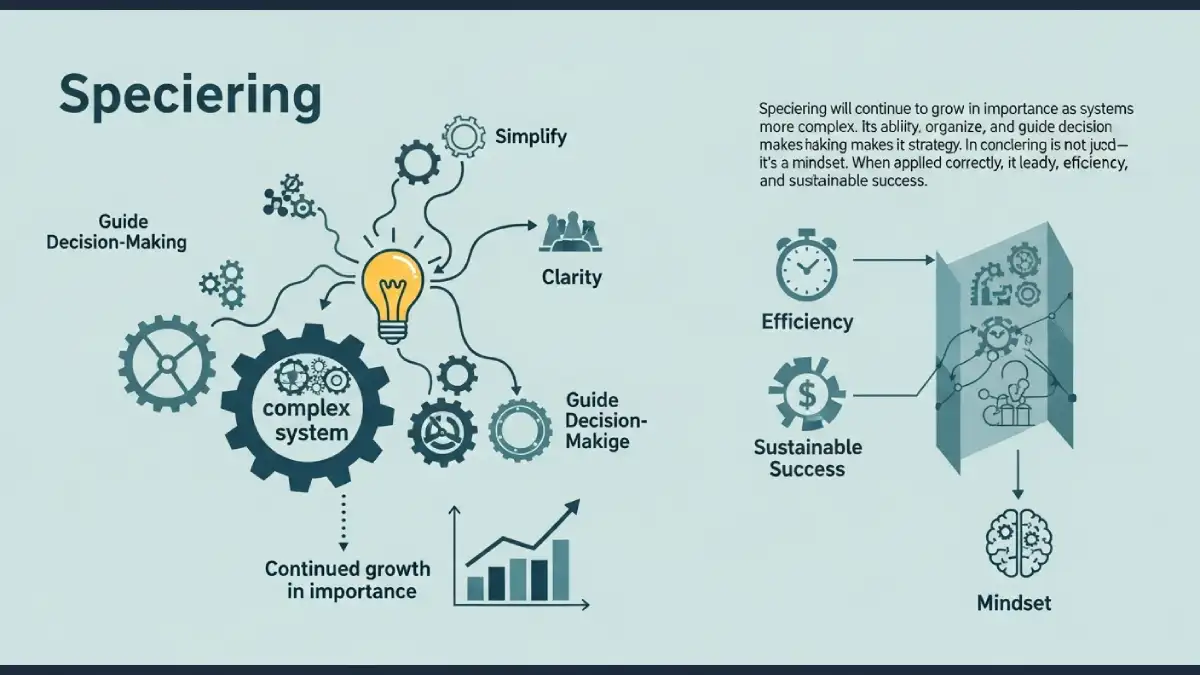
Understanding Speciering: A Clear Foundation
Speciering is a structured approach used to organize, refine, and apply complex systems in a simplified and effective way. At its core, speciering helps individuals and organizations make better decisions by breaking down information into manageable and actionable components.
To put it simply, speciering allows people to move from confusion to clarity. Instead of handling everything at once, it focuses on grouping, prioritizing, and refining elements step by step. Because of this, speciering has become increasingly valuable in modern workflows.
Definition and Core Meaning
The term speciering refers to the method of classifying and structuring elements based on shared characteristics. This approach ensures consistency, accuracy, and better control over outcomes. While the concept may sound technical, its application is surprisingly practical.
For example, in structured planning environments, speciering helps teams identify what truly matters. As a result, fewer mistakes are made, and productivity improves naturally.
Why Speciering Matters Today
In today’s fast-moving world, information overload is a real challenge. Speciering addresses this issue by creating order where there is chaos. Moreover, it supports better communication because everyone works from the same structured framework.
Additionally, speciering reduces wasted effort. When tasks are properly categorized, resources are used more efficiently. This benefit alone makes speciering a powerful tool across industries.
Common Misconceptions
Some people assume speciering is overly complex. However, that couldn’t be further from the truth. In reality, speciering simplifies processes rather than complicating them. Another misconception is that it only applies to technical fields, but it’s equally useful in education, management, and planning.
How Speciering Works in Practice
Understanding theory is important, but seeing speciering in action is where its real value appears. Practical implementation follows a logical flow that anyone can learn.
Step-by-Step Speciering Process
The first step in speciering is identifying key elements. Once identified, these elements are grouped based on relevance. After that, priorities are assigned, and unnecessary components are removed.
This process creates clarity. Instead of guessing what to do next, the structure guides decision-making naturally. Over time, this method becomes second nature.
Tools and Techniques
Several tools support effective speciering. These include structured charts, classification tables, and decision trees. While digital tools can help, pen-and-paper methods still work just fine.
For deeper conceptual understanding, resources such as structured classification methods discussed on educational platforms like Wikipedia can be useful:
https://en.wikipedia.org/wiki/Classification
Real-World Applications
Speciering is widely used in system planning, educational frameworks, and operational strategies. For instance, project managers rely on speciering to divide large goals into achievable milestones.
Furthermore, educators use speciering to organize learning outcomes. This ensures students progress logically, without feeling overwhelmed.
Benefits and Challenges of Speciering
Like any structured approach, speciering comes with both advantages and challenges. Understanding both helps ensure long-term success.
Key Advantages
One major benefit of speciering is improved efficiency. When tasks are properly structured, less time is wasted. Additionally, accuracy improves because fewer details are overlooked.
Another advantage is scalability. Speciering grows with the system, making it suitable for both small projects and large operations.
Common Challenges
Despite its strengths, speciering can be misused. Over-classification may slow progress if not managed carefully. Some teams also resist structured methods, preferring flexibility.
However, these challenges are manageable with the right mindset.
How to Overcome Barriers
To overcome resistance, it’s important to explain the value of speciering clearly. Starting small also helps. Once users see results, adoption becomes easier.
Consistency is key. When speciering is applied regularly, its benefits compound over time.
Sodziu Power Guide 7: Practical Insights for Smarter Decisions
Best Practices for Effective Speciering
Using speciering correctly requires intention and discipline. Fortunately, best practices make implementation smoother.
Strategic Planning
Every successful speciering system begins with clear goals. Knowing what you want to achieve helps shape the structure. Without this clarity, even the best framework can fail.
Optimization Tips
Keep systems simple. Avoid unnecessary layers, and review classifications regularly. Adjustments ensure the structure remains relevant as needs change.
Measuring Success
Success in speciering is measured by clarity, speed, and outcomes. If decisions are easier and results improve, the system is working.
FAQ 1: What is speciering used for?
Speciering is used to organize complex information into structured categories, making processes clearer and more manageable.
FAQ 2: Is speciering difficult to learn?
No, speciering is easy to learn. With basic guidance, anyone can apply it effectively.
FAQ 3: Can speciering be applied outside technical fields?
Yes, speciering is useful in education, management, planning, and everyday decision-making.
FAQ 4: How often should speciering systems be reviewed?
They should be reviewed regularly to ensure relevance and effectiveness as conditions change.
FAQ 5: Does speciering improve productivity?
Absolutely. By reducing confusion and improving focus, speciering enhances productivity.
Future Trends and Conclusion
Speciering will continue to grow in importance as systems become more complex. Its ability to simplify, organize, and guide decision-making makes it a timeless strategy.
In conclusion, speciering is not just a method—it’s a mindset. When applied correctly, it leads to clarity, efficiency, and sustainable success.

Introduction
Geography plays a powerful role in shaping how young learners understand the world, and jr geo has emerged as an engaging way to make that learning simple, interactive, and meaningful. Instead of overwhelming students with memorization, this approach focuses on curiosity, exploration, and real-world connections that help knowledge stick naturally.
In today’s fast-changing educational environment, learners need more than textbooks. They need tools and methods that build understanding, confidence, and long-term interest. This article explores how junior-focused geography learning works, why it matters, and how it compares to traditional learning approaches—while keeping the experience enjoyable and effective.
What Is Jr Geo and Why It Matters
Jr geo is a beginner-friendly geography learning concept designed especially for children and early learners. It introduces geographical ideas in a simplified, structured way while still maintaining academic depth. The focus stays on understanding places, environments, maps, and global relationships without cognitive overload.
Instead of passive learning, this method encourages students to:
-
Visualize maps and landscapes
-
Understand how people interact with places
-
Connect geography with daily life
-
Develop spatial awareness early
This foundation supports future academic success by making geography feel approachable rather than intimidating.
How Junior Geography Learning Builds Strong Foundations
Early exposure to geography shapes how learners interpret the world. Junior-level geography learning emphasizes understanding rather than memorization, which leads to deeper comprehension.
Key benefits include:
-
Improved spatial thinking through map reading and visualization
-
Cultural awareness by learning about regions, climates, and people
-
Critical thinking skills through problem-solving scenarios
-
Environmental responsibility by understanding natural systems
These skills extend beyond geography and support subjects like science, history, and even mathematics.
Buccal Fat Removal: The Truth Behind a Sharper, Sculpted Face
Learning Approach and Teaching Style
Junior geography learning prioritizes clarity, interaction, and relevance. Lessons often follow a structured flow:
-
Simple concepts first
-
Visual examples and scenarios
-
Real-life applications
-
Reinforcement through activities
This step-by-step method ensures learners remain confident while progressing steadily. Teachers and parents also benefit because the material is easy to explain and adapt to different learning speeds.
Comparison Chart: Junior Geography vs Traditional Geography Learning
| Feature | Junior Geography Learning | Traditional Geography Learning |
|---|---|---|
| Learning Style | Interactive and concept-based | Memorization-focused |
| Age Suitability | Designed for young learners | Often generalized |
| Engagement Level | High and curiosity-driven | Moderate to low |
| Real-World Examples | Frequently used | Limited |
| Skill Development | Critical thinking and awareness | Fact recall |
This comparison highlights why jr geo stands out as a more learner-centered approach for beginners.
Why Parents and Educators Prefer This Approach
Parents and educators increasingly seek learning methods that balance education and enjoyment. Junior geography learning succeeds because it:
-
Reduces academic pressure
-
Encourages questions and discussion
-
Supports different learning styles
-
Builds confidence early
By presenting information in a relatable way, students feel motivated rather than forced to learn.
Role of Technology in Junior Geography Learning
Modern junior geography education often integrates digital tools such as interactive maps, visual simulations, and guided exercises. These elements help learners:
-
Understand complex locations visually
-
Explore global environments safely
-
Retain information longer
Technology does not replace teaching—it enhances it by making abstract ideas tangible and memorable.
Long-Term Impact on Academic Growth
Students introduced to geography through junior-focused methods often show stronger performance later. They demonstrate:
-
Better map interpretation skills
-
Higher interest in global studies
-
Stronger environmental awareness
-
Improved analytical thinking
These outcomes reflect how early learning methods influence long-term academic success.
Common Challenges and How They Are Solved
Young learners may struggle with abstract geographic terms or large-scale concepts. Junior geography learning addresses this by:
-
Breaking topics into smaller units
-
Using visuals instead of heavy text
-
Reinforcing ideas through repetition
-
Connecting lessons to familiar places
This approach ensures learning remains accessible without sacrificing accuracy.
Frequently Asked Questions
1. What age group is jr geo suitable for?
It is ideal for children and beginners who are starting to explore geography concepts in a structured yet friendly way.
2. Does junior geography learning replace school curriculum?
No, it complements standard education by strengthening understanding and engagement alongside formal lessons.
3. How does jr geo improve learning retention?
It uses visual learning, real-life examples, and interaction to help students remember concepts longer.
4. Can parents support learning at home?
Yes, parents can reinforce lessons through discussions, map activities, and everyday observations.
5. Is this approach effective for long-term education?
Yes, it builds foundational skills that support advanced geography and related subjects later.
Conclusion
Geography shapes how learners see the world, and jr geo offers a thoughtful, effective way to introduce this essential subject at an early stage. By focusing on understanding, engagement, and relevance, it helps young minds grow confident and curious about the planet they live on.
When learners enjoy the process, knowledge becomes lasting. Junior-focused geography learning proves that strong foundations begin with clarity, creativity, and the right educational approach.

Introduction
What is Sargarpgio AI and what does it offer? At its core, Sargarpgio AI is an advanced artificial intelligence platform designed to transform the way humans interact with technology. Unlike traditional systems that only respond to commands, Sargarpgio AI adapts, learns, and evolves in real time, creating a more natural and intelligent user experience. It offers enhanced problem-solving, predictive analytics, automation, and decision-making power that fits into multiple industries—from healthcare and education to business and creative development.
In today’s fast-moving digital era, innovation is not just an advantage; it’s a necessity. That’s why Sargarpgio AI has gained attention as a powerful solution that blends human-like reasoning with machine precision. It provides a seamless path for businesses and individuals to explore smarter tools, reduce errors, and increase efficiency.
This article dives deep into what Sargarpgio AI really is, its benefits, its applications, and how it compares with other AI technologies.
1. What is Sargarpgio AI?
Sargarpgio AI is a next-generation artificial intelligence system that focuses on adaptability and context-based learning. Unlike older AI models that rely heavily on static data, Sargarpgio AI uses continuous learning techniques to evolve with user behavior and industry needs. It integrates machine learning, natural language processing, and predictive modeling to deliver smarter insights and solutions.
At its heart, Sargarpgio AI isn’t just about responding—it’s about understanding. It detects patterns, anticipates outcomes, and makes decisions that mirror human intuition. This makes it an essential tool for industries looking to modernize operations and enhance user engagement.
More Article Here
2. How Sargarpgio AI Works
Sargarpgio AI uses a layered approach to decision-making:
-
Data Collection: It gathers structured and unstructured data in real time.
-
Pattern Recognition: It identifies connections and relationships within the data.
-
Contextual Understanding: Unlike basic algorithms, it interprets meaning behind data.
-
Predictive Analysis: It anticipates outcomes, offering proactive solutions.
-
Continuous Learning: It improves itself over time by learning from new inputs.
This layered process ensures accuracy, adaptability, and higher performance efficiency.
3. Key Features of Sargarpgio AI
-
Self-Learning Capabilities – Constantly adapts to user behavior.
-
Natural Language Processing (NLP) – Communicates more human-like.
-
Real-Time Insights – Delivers up-to-the-second analysis.
-
Predictive Modeling – Helps forecast trends and future outcomes.
-
Scalability – Works efficiently in both small and enterprise-level systems.
4. Benefits of Using Sargarpgio AI
-
Enhanced Productivity – Automates repetitive tasks.
-
Smarter Decision Making – Reduces guesswork with data-backed insights.
-
Cost Efficiency – Minimizes human error and resource waste.
-
Personalization – Offers customized solutions for businesses and users.
-
Global Impact – Can be applied across multiple industries seamlessly.
5. Real-World Applications of Sargarpgio AI
-
Healthcare – Assisting in diagnostics, patient monitoring, and personalized treatment plans.
-
Education – Offering adaptive learning experiences for students.
-
Business – Enhancing customer service, automating operations, and optimizing supply chains.
-
Finance – Detecting fraud, improving investments, and automating transactions.
-
Creative Industry – Helping writers, designers, and artists with new-age AI tools.
6. Sargarpgio AI vs. Traditional AI Systems
Unlike traditional AI systems that rely on pre-programmed responses, Sargarpgio AI focuses on evolution and adaptability. It goes beyond mere automation by embedding intelligence into every process.
7. Comparison Chart: Sargarpgio AI vs. Other AI Models
| Feature/Aspect | Sargarpgio AI | Traditional AI Models |
|---|---|---|
| Learning Style | Continuous, adaptive | Static, rule-based |
| Decision Accuracy | High with context | Moderate, data-limited |
| Natural Interaction | Human-like NLP | Limited command-based |
| Scalability | Highly scalable | Restricted |
| Predictive Analysis | Advanced forecasting | Basic trend analysis |
8. How Businesses Can Leverage Sargarpgio AI
Businesses can integrate Sargarpgio AI to:
-
Improve customer satisfaction through intelligent chat systems.
-
Automate routine tasks and free up human resources for creative work.
-
Gain predictive insights for market trends and consumer behavior.
-
Strengthen decision-making with accurate real-time data analysis.
9. Challenges and Limitations of Sargarpgio AI
While powerful, Sargarpgio AI also faces challenges:
-
High Implementation Costs – Requires strong infrastructure.
-
Data Privacy Concerns – Needs strict protocols for user security.
-
Skill Gap – Companies must train staff to effectively use the system.
-
Ethical Issues – AI-driven decisions must align with human values.
10. The Future of Sargarpgio AI
Sargarpgio AI is expected to play a vital role in the future of AI-driven technology. With continuous improvements, it will likely become a central part of industries worldwide. As digital ecosystems evolve, Sargarpgio AI will act as the bridge between human creativity and machine precision, paving the way for a more connected, smarter future.
11. FAQs
Q1: What makes Sargarpgio AI different from other AI models?
Sargarpgio AI adapts in real time, offering smarter and more personalized solutions compared to traditional static models.
Q2: Can small businesses use Sargarpgio AI?
Yes, it’s scalable, meaning it works for both startups and large enterprises.
Q3: Is Sargarpgio AI safe for handling sensitive data?
With proper security protocols, Sargarpgio AI can manage sensitive data responsibly.
Q4: Does Sargarpgio AI require technical expertise?
Basic training is needed, but its user-friendly design makes it accessible.
Q5: What industries benefit most from Sargarpgio AI?
Healthcare, finance, education, and business operations are leading sectors where it excels.
Conclusion
Sargarpgio AI is more than just another artificial intelligence platform; it’s a groundbreaking innovation shaping the future of technology. With its ability to learn, adapt, and predict outcomes in real time, it provides unmatched value for businesses and individuals alike. Despite challenges like implementation costs and ethical concerns, the benefits of Sargarpgio AI far outweigh its limitations. As industries move toward smarter solutions, Sargarpgio AI stands at the forefront of digital transformation, ready to redefine efficiency, intelligence, and creativity for the modern world.

America/California Time Zone Guide: Never Miss a Meeting Again

The Rarest Arc Raiders Blueprints and How to Get Them

Speciering Guide: Powerful 7 Facts You Must Know

Top Chartered Accountants Benefits: Guide, Tips, FAQs & More

blogsternation .com: Complete Beginner’s Guide, Benefits, and FAQs

How Many Quarters in Football? A Complete Guide to Game Structure and Timing
-
 Business10 months ago
Top Chartered Accountants Benefits: Guide, Tips, FAQs & More
-
Tech10 months ago
blogsternation .com: Complete Beginner’s Guide, Benefits, and FAQs
-
Sports10 months ago
How Many Quarters in Football? A Complete Guide to Game Structure and Timing
-
Tech8 months ago
How to Upgrade Graphics Driver: Boost Speed, Fix Issues & Enhance Gaming
-
Editors Pick9 months ago
Astonishing Mist: Why Delta Flight DL275 Diverted LAX Mid‑Pacific
-
Editors Pick9 months ago
Craft “Your Topics Multiple Stories” into Engaging Multi‑Angle Narratives
-
Business10 months ago
Unlocking the Truth About gomyfinance.com Credit Score
-
Education10 months ago
Oxford Acceptance Rate: What It Means, Why It Matters, and How to Beat It