
Editors Pick
Greek Mythology Symbols: Meaning, History, and Significance

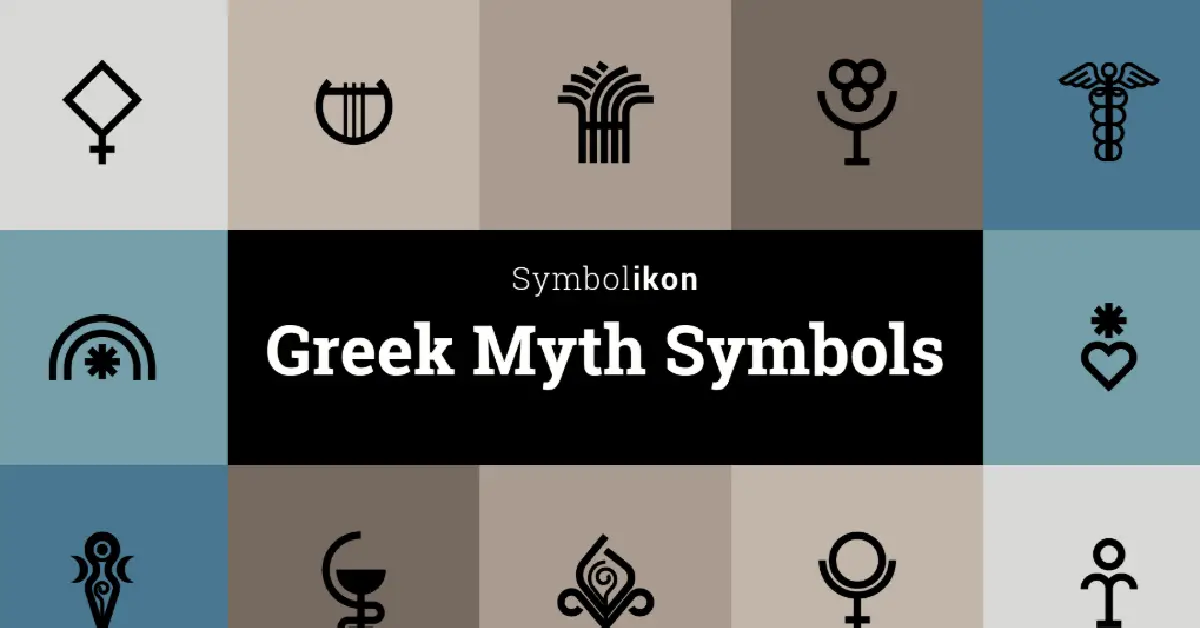
Greek mythology symbols are powerful visual representations of the gods, goddesses, creatures, and myths that shaped ancient Greek culture. These symbols carry deep meanings, often tied to themes like wisdom, love, war, death, and the natural world. From Zeus’s thunderbolt to Athena’s owl, each emblem tells a story and offers insights into ancient beliefs, values, and traditions. For historians, art lovers, and mythology enthusiasts, understanding Greek mythology symbols opens a gateway to the rich tapestry of myths that continue to inspire literature, art, and modern culture today.
1. Background and Evolution of Greek Mythology Symbols
Greek mythology symbols evolved over centuries, influenced by religion, storytelling traditions, and cross-cultural exchanges with civilizations like the Egyptians and Romans. Initially, these symbols appeared in oral myths, then in ancient pottery, sculptures, and temple carvings. Over time, they became shorthand for complex ideas—such as Zeus’s thunderbolt representing divine power or the olive branch symbolizing peace.
In the Hellenistic period, artists and philosophers began using symbols not only in religious contexts but also in political propaganda, reinforcing rulers’ connections to specific deities.
2. Overview of Key Greek Mythology Symbols
Here’s a quick table of popular symbols, their associated deity, and meaning:
| Symbol | Associated Deity | Meaning |
|---|---|---|
| Thunderbolt | Zeus | Power, authority, divine will |
| Owl | Athena | Wisdom, strategy, knowledge |
| Trident | Poseidon | Sea control, storms, earthquakes |
| Caduceus | Hermes | Communication, trade, travel |
| Dove | Aphrodite | Love, beauty, peace |
| Helm of Darkness | Hades | Invisibility, death, the underworld |
3. Detailed Explanations of Major Symbols
3.1 Zeus’s Thunderbolt
The thunderbolt was Zeus’s ultimate weapon, forged by the Cyclopes. It symbolized unmatched authority and the power to both create and destroy. In art, Zeus is often depicted holding a lightning bolt mid-strike.
3.2 Athena’s Owl
The owl stood for wisdom and foresight. Athenians considered it a protective emblem, often placing it on coins and military armor.
3.3 Poseidon’s Trident
The three-pronged trident represented Poseidon’s mastery over the sea. It was said to cause earthquakes when struck against the ground.
3.4 Hermes’ Caduceus
A staff with two entwined snakes, the caduceus symbolized negotiation and commerce. Modern medicine often misuses it instead of the Rod of Asclepius.
3.5 Aphrodite’s Dove
The dove signified love, peace, and beauty, often appearing alongside roses in depictions of Aphrodite.
3.6 Hades’ Helm of Darkness
This magical helmet granted invisibility to the wearer. Perseus famously used it when slaying Medusa.
4. Comparison with Other Mythological Symbol Systems
While Norse mythology uses symbols like Mjölnir (Thor’s hammer) to convey strength, and Egyptian mythology employs the Eye of Horus for protection, Greek mythology emphasizes human-like qualities of gods through their symbols. Unlike the abstract patterns in Celtic mythology, Greek symbols are often literal objects linked to the deity’s powers.
5. Benefits of Understanding Greek Mythology Symbols
-
Enhances appreciation of ancient art and architecture
-
Offers insights into historical literature and poetry
-
Helps decode symbolic meanings in modern films and books
-
Preserves cultural heritage and storytelling traditions
6. Symbolism in Ancient Art and Literature
In ancient Greece, symbols appeared on temple walls, amphorae, shields, and public buildings. Poets like Homer and Hesiod embedded symbolic imagery in their epics, using objects to foreshadow events or reveal character traits.
7. Modern Adaptations and Cultural Influence
Today, Greek mythology symbols influence corporate logos, military insignias, and even fashion. Brands use Athena’s owl for wisdom-based products, while sports teams adopt Zeus’s thunderbolt for its power connotations.
8. Preservation and Authenticity of Symbols
Museums, archaeological digs, and academic research ensure the accuracy of these symbols. However, pop culture often distorts them, blending Greek and Roman interpretations or simplifying complex meanings.
9. Pros and Cons of Using Greek Mythology Symbols Today
Pros:
-
Rich historical background
-
Strong visual impact
-
Recognizable across cultures
Cons:
-
Risk of cultural misinterpretation
-
Overuse in commercial branding can dilute meaning
10. Conclusion
Greek mythology symbols are more than decorative elements—they are cultural keys that unlock the values, fears, and dreams of an ancient civilization. From Zeus’s thunderbolt to Hades’ helm, each emblem carries a story worth preserving and retelling. Whether for education, design, or personal fascination, these symbols remain timeless markers of human imagination.
11. FAQs
Q1: What is the most powerful Greek mythology symbol?
Zeus’s thunderbolt is often considered the most powerful due to its association with supreme authority.
Q2: Are Greek mythology symbols still used today?
Yes, they appear in literature, branding, military insignia, and entertainment.
Q3: Did the Romans use Greek mythology symbols?
Yes, they adopted many Greek symbols but often renamed the deities.
Q4: What symbol represents wisdom in Greek mythology?
The owl, associated with Athena, represents wisdom.
Q5: Which symbol represents love?
Aphrodite’s dove is the main symbol of love and beauty.



Introduction
The world of digital manga has evolved rapidly, driven by passionate communities that work behind the scenes to make stories accessible across languages and cultures. Among these movements, olympus scanlation has emerged as a name frequently discussed by readers who value speed, accuracy, and dedication. This phenomenon reflects how fan-driven translation groups influence reading habits, storytelling appreciation, and the overall growth of manga beyond its original borders.
Understanding this topic requires more than surface-level knowledge. It involves examining how scanlation communities function, what motivates them, and why readers continue to rely on them in an age of expanding official releases.
Understanding Scanlation Culture
Scanlation is a process where fans translate, edit, and distribute manga chapters that are not easily available in certain languages. This practice grew out of necessity when international access lagged far behind original releases. Over time, it developed into a structured ecosystem involving translators, editors, proofreaders, and quality checkers.
These groups often operate with shared values:
-
Respect for the original story
-
Commitment to translation accuracy
-
Desire to serve global readers
While controversial, scanlation remains deeply rooted in fan culture and continues to shape how manga is consumed worldwide.
The Rise of Community-Driven Translation Groups
Community-based translation efforts thrive because they fill gaps that official publishing cannot always address immediately. Readers want timely access, cultural context, and clear language flow. Volunteer teams organize themselves efficiently, often releasing chapters faster than traditional pipelines.
Within this landscape, olympus scanlation stands out due to its consistent workflow and reader-focused approach. Instead of rushing incomplete releases, the emphasis stays on clarity, formatting, and faithful storytelling.
Why pcharfen.co.uk Is Gaining Attention as a Modern Digital Identity
Quality Control and Translation Accuracy
One major concern readers have with fan translations is quality. Poor grammar or mistranslations can ruin immersion. Well-organized groups solve this problem by assigning specific roles to each contributor.
Key quality measures include:
-
Multiple translation reviews
-
Cultural nuance checks
-
Dialogue tone adjustments
-
Final proofreading before release
These steps ensure that the reading experience feels natural while preserving the original intent of the creator.
Impact on Global Manga Accessibility
Digital fan translations dramatically increase accessibility. Readers from regions with limited publishing options gain exposure to genres and stories that would otherwise remain unavailable. This accessibility often sparks deeper interest, leading readers to support official releases when they become available.
By reducing language barriers, olympus scanlation contributes to expanding global fandoms and strengthening cross-cultural appreciation of manga storytelling.
Comparison Chart: Fan Scanlation vs Official Translation
| Feature | Fan Scanlation | Official Translation |
|---|---|---|
| Release Speed | Very fast | Slower |
| Cultural Notes | Often detailed | Limited |
| Language Flexibility | High | Standardized |
| Reader Feedback | Immediate | Minimal |
| Accessibility | Global | Region-restricted |
| Cost to Reader | Free | Paid |
This comparison helps readers understand why both models coexist and serve different needs within the manga ecosystem.
Ethical Considerations and Reader Responsibility
Scanlation raises ethical questions regarding creator rights and intellectual property. Many fan groups openly encourage readers to support official releases when possible. This balance reflects a community that values creators while acknowledging access limitations.
Responsible readership means:
-
Appreciating the work behind translations
-
Supporting creators through legal purchases
-
Understanding the temporary role of fan translations
How Reader Demand Shapes Scanlation Trends
Reader engagement directly influences which series receive attention. Comments, feedback, and popularity metrics guide translation priorities. Groups adapt quickly, responding to demand while maintaining quality standards.
This responsiveness helps explain the sustained relevance of olympus scanlation in a fast-changing digital environment.
Future of Scanlation Communities
As official digital publishing expands, scanlation may shift rather than disappear. Communities could focus more on niche genres, older titles, or culturally complex works. The skills developed through fan translation also contribute to professional localization careers.
The future likely involves coexistence, adaptation, and continued dialogue between fans and publishers.
FAQs
1. What makes olympus scanlation popular among readers?
It is known for consistent quality, careful translation, and strong community engagement that prioritizes reader experience.
2. Is scanlation legal to read?
Legality varies by region. Readers are encouraged to support official releases whenever available.
3. How do scanlation groups maintain accuracy?
They use multi-step review processes involving translators, editors, and proofreaders.
4. Can scanlation help promote manga globally?
Yes, it increases exposure and often leads readers toward official content later.
5. Will scanlation disappear in the future?
It is more likely to evolve, focusing on underserved content rather than mainstream titles.
Conclusion
The influence of olympus scanlation extends far beyond simple translation. It represents dedication, community effort, and a shared love for storytelling that transcends language barriers. While debates around ethics continue, its role in shaping global manga readership remains undeniable. As digital media evolves, this movement will likely adapt, continuing to connect readers with stories they love while encouraging deeper appreciation for the creators behind them.

Introduction
In a world where visibility often defines influence, matt danzeisen represents a different kind of power—one rooted in discretion, financial expertise, and purposeful living. Unlike many public figures tied to high-profile industries, he has maintained a notably private life while building a respected career in finance. This balance between professional success and personal privacy has made him a subject of curiosity and admiration alike.
This article explores his background, career trajectory, personal philosophy, and broader influence, offering readers a comprehensive and accurate look at a figure who operates quietly yet effectively.
Early Life and Educational Foundation
Strong foundations often shape lasting success. From an early age, Danzeisen showed an interest in structured thinking, problem-solving, and long-term planning—skills that naturally align with financial analysis and investment management. His academic background reflects a disciplined approach, emphasizing economics, finance, and strategic reasoning.
Education played a central role in developing his analytical mindset. Rather than chasing visibility, he focused on mastery—learning how markets move, how risk behaves, and how value compounds over time. This early commitment would later define his professional reputation.
Professional Career and Financial Expertise
The career of matt danzeisen is built on credibility rather than publicity. He has worked within the financial sector as an investment and portfolio professional, contributing to asset management strategies that prioritize long-term growth and measured risk.
His professional style reflects three defining traits:
-
Data-driven decision-making
-
Risk-aware investment strategy
-
Ethical financial stewardship
Rather than speculative trends, his work emphasizes sustainable value creation. This approach aligns with modern investment philosophies that favor resilience over volatility, especially in uncertain economic environments.
Facial Liposuction: The Secret to a Sharper, More Defined Face
A Philosophy Rooted in Privacy and Purpose
Privacy is not absence—it is intention. Danzeisen’s choice to remain largely out of the public spotlight demonstrates a belief that meaningful impact does not require constant attention. This philosophy extends into both his professional and personal life.
By limiting public exposure, he maintains focus on:
-
Strategic financial work
-
Personal values
-
Community-oriented causes
This restraint has strengthened trust among professional peers, reinforcing the idea that credibility grows through consistency, not visibility.
Personal Life and Public Interest
Public curiosity often increases when private individuals are connected to well-known personalities. While interest in matt danzeisen has grown over time, he continues to define his own identity beyond association.
His personal life reflects balance—supporting shared values while maintaining individual purpose. This dynamic highlights a modern partnership model built on mutual respect, independence, and aligned principles rather than public performance.
Influence Without Noise
Influence does not always announce itself. Danzeisen’s impact appears in quieter ways—through financial decisions, ethical alignment, and long-term thinking. He represents a growing group of professionals who value substance over spectacle.
Key areas of influence include:
-
Responsible capital allocation
-
Long-term economic thinking
-
Quiet leadership within financial circles
This form of influence resonates strongly in today’s environment, where credibility increasingly outweighs charisma.
Comparison Chart: Public Visibility vs Private Influence
| Aspect | High-Visibility Public Figures | Private Financial Professionals |
|---|---|---|
| Media Presence | Constant | Minimal |
| Influence Style | Public persuasion | Strategic decision-making |
| Risk Exposure | Reputation-based | Market-based |
| Longevity | Trend-dependent | Value-driven |
| Trust Building | Audience approval | Professional credibility |
This comparison helps clarify why figures like Danzeisen command respect without requiring attention.
Values That Shape Decision-Making
At the core of matt danzeisen’s professional identity lies a consistent value system. Financial expertise alone does not sustain long-term success—values do.
His work reflects:
-
Integrity in financial judgment
-
Responsibility toward capital stewardship
-
Awareness of broader social impact
These principles align with modern expectations of financial professionals who must balance profitability with accountability.
Relevance in Today’s Financial Landscape
As markets evolve, the need for disciplined, ethical financial leadership grows. Danzeisen’s approach mirrors broader industry shifts toward transparency, sustainability, and resilience.
His relevance today stems from:
-
Adaptability to market changes
-
Commitment to long-term outcomes
-
Quiet confidence grounded in experience
These qualities make his professional model increasingly valuable in uncertain economic cycles.
Frequently Asked Questions
1. Who is matt danzeisen?
He is a finance professional known for his investment expertise, privacy-focused lifestyle, and strategic influence within financial circles.
2. What is his professional background?
His career centers on investment management and portfolio strategy, emphasizing long-term value and responsible risk management.
3. Why is he considered influential despite low visibility?
Influence comes from decisions, not exposure. His work affects capital flow and strategic outcomes without relying on public attention.
4. How does he approach financial responsibility?
Through disciplined analysis, ethical standards, and a focus on sustainable growth rather than short-term speculation.
5. What can professionals learn from his career?
That consistency, discretion, and values-driven decision-making often outperform visibility-based success models.
Conclusion
The story of matt danzeisen challenges conventional ideas about influence and success. By prioritizing expertise, integrity, and privacy, he demonstrates that meaningful impact does not require constant recognition. His career serves as a compelling example for professionals who seek lasting relevance through substance rather than spectacle.
In an era dominated by noise, his quiet strength stands out—and endures.

Introduction
The rapid growth of niche digital platforms has reshaped how users discover and consume online content. Among these emerging names, هنتاوي.com has gained notable attention for its unique positioning, user-focused design, and evolving digital presence. Readers searching for clarity, functionality, and trust want more than surface-level explanations—they want depth, accuracy, and transparency.
This comprehensive guide delivers exactly that. You will explore how the platform works, what makes it distinct, and why users continue to discuss it across online communities. Every section is crafted to provide real value, practical insights, and clear understanding while maintaining a smooth, engaging flow.
Understanding the Concept Behind the Platform
At its core, هنتاوي.com represents a modern approach to content organization and user experience. Instead of overwhelming visitors with unnecessary complexity, the platform focuses on streamlined navigation, structured presentation, and intuitive usability.
The platform is designed around three core principles:
-
Accessibility for new and experienced users
-
Minimal friction in content discovery
-
Continuous adaptation to user expectations
This approach reflects current digital behavior trends, where users prioritize speed, clarity, and relevance over clutter.
AC Milan vs Bari Timeline: A Historic Clash of Tradition, Drama, and Italian Football Passion
Key Features That Define the User Experience
What separates a sustainable digital platform from a short-lived trend is its ability to deliver consistent value. This platform demonstrates several standout features that directly support long-term user engagement.
1. Clean Interface Design
The layout emphasizes readability, balanced spacing, and logical structure. Users can navigate sections without confusion or excessive scrolling.
2. Content Categorization
Material is grouped clearly, helping users locate relevant sections quickly without guesswork.
3. Device Responsiveness
The platform performs smoothly across desktops, tablets, and smartphones, ensuring continuity regardless of screen size.
4. Performance Optimization
Fast loading times improve retention and reduce bounce rates, aligning with modern SEO and usability standards.
AC Milan vs Bari Timeline: A Historic Clash of Tradition, Drama, and Italian Football Passion
How the Platform Fits Into Today’s Digital Landscape
The digital ecosystem has evolved dramatically over the last few years. Users now demand platforms that respect their time and offer meaningful engagement rather than distraction. هنتاوي.com aligns with these expectations by focusing on clarity and structure instead of unnecessary visual noise.
From an SEO perspective, platforms that prioritize user satisfaction naturally perform better. Search engines increasingly reward:
-
Positive user engagement
-
Clear content hierarchy
-
Transparent structure
This platform’s architecture reflects those priorities.
Comparison Chart: Platform Strength Analysis
The following comparison chart highlights how the platform performs across essential evaluation factors compared to generic digital platforms.
| Feature Area | This Platform | Generic Platforms |
|---|---|---|
| Interface Clarity | High | Medium |
| Navigation Flow | Smooth & Logical | Often Cluttered |
| Mobile Compatibility | Fully Optimized | Inconsistent |
| User Focus | Strong | Variable |
| Content Structure | Well-Organized | Fragmented |
| Performance Speed | Fast | Moderate |
This comparison shows how thoughtful design decisions directly improve user satisfaction and platform efficiency.
User Trust, Safety, and Transparency
Trust plays a central role in digital platform adoption. Users want assurance that their experience will remain consistent, respectful, and secure. هنتاوي.com emphasizes transparency by maintaining predictable behavior, stable performance, and user-first interaction models.
Key trust-building elements include:
-
Clear content presentation
-
No forced interactions
-
Stable user environment
These qualities contribute to long-term credibility and positive reputation.
Common Use Scenarios and Audience Appeal
Different users approach the platform with different expectations. Some seek exploration, others seek efficiency. هنتاوي.com adapts well to both.
Typical audience groups include:
-
Curious explorers seeking structured content
-
Regular users valuing consistent performance
-
Mobile users requiring responsive design
This versatility increases platform relevance across demographics.
Frequently Asked Questions
1. What makes this platform different from others?
The platform focuses on simplicity, structured navigation, and performance instead of excessive features that distract users.
2. Is the platform beginner-friendly?
Yes. Its layout and organization make it easy for new users to navigate without prior experience.
3. Does it work well on mobile devices?
The platform is fully responsive and optimized for smooth mobile use.
4. How does it maintain user trust?
Through predictable behavior, transparent structure, and consistent performance standards.
5. Is the platform designed for long-term use?
Yes. Its scalable design and user-centric approach support sustainable growth.
Conclusion
In a crowded digital environment, clarity and user respect determine success. هنتاوي.com demonstrates how thoughtful structure, usability, and transparency can create a reliable and engaging platform experience. Instead of relying on trends, it builds value through consistency and purpose.
For users seeking an organized, accessible, and performance-driven digital platform, this guide shows why the platform continues to attract attention and discussion. As digital expectations continue to rise, platforms built with intention and user focus will always stand apart.

America/California Time Zone Guide: Never Miss a Meeting Again

The Rarest Arc Raiders Blueprints and How to Get Them

Speciering Guide: Powerful 7 Facts You Must Know

Top Chartered Accountants Benefits: Guide, Tips, FAQs & More

blogsternation .com: Complete Beginner’s Guide, Benefits, and FAQs

How Many Quarters in Football? A Complete Guide to Game Structure and Timing
-
 Business11 months ago
Top Chartered Accountants Benefits: Guide, Tips, FAQs & More
-
Tech11 months ago
blogsternation .com: Complete Beginner’s Guide, Benefits, and FAQs
-
Sports11 months ago
How Many Quarters in Football? A Complete Guide to Game Structure and Timing
-
Tech9 months ago
How to Upgrade Graphics Driver: Boost Speed, Fix Issues & Enhance Gaming
-
Editors Pick10 months ago
Astonishing Mist: Why Delta Flight DL275 Diverted LAX Mid‑Pacific
-
Editors Pick10 months ago
Craft “Your Topics Multiple Stories” into Engaging Multi‑Angle Narratives
-
Business11 months ago
Unlocking the Truth About gomyfinance.com Credit Score
-
Education11 months ago
Oxford Acceptance Rate: What It Means, Why It Matters, and How to Beat It